
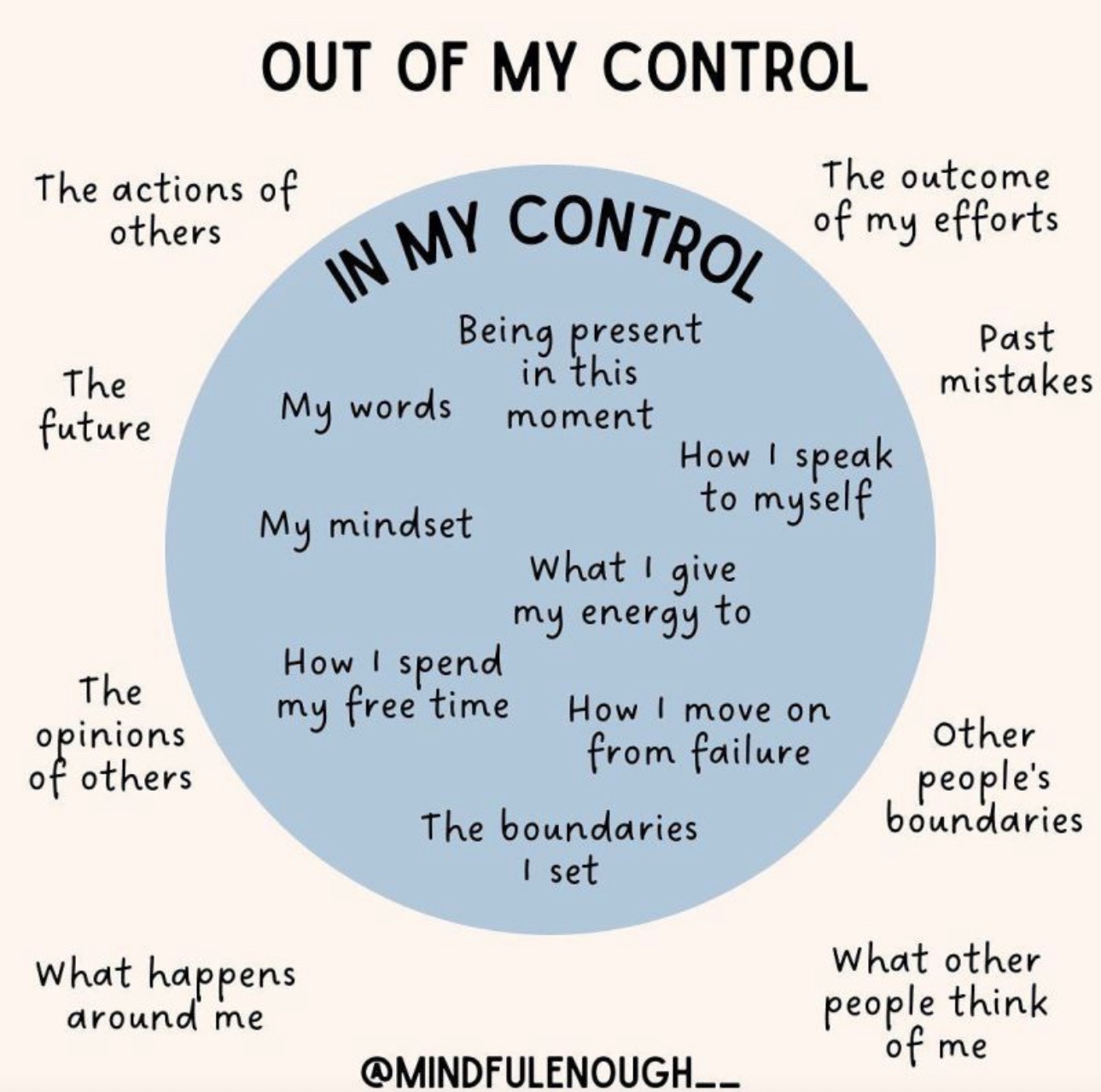
I stumbled upon this meme tonight on LinkedIn from @mindfulenough that really got me thinking. The meme stressed the importance of letting go of the things that are out of our control—such as the actions of others, the future, the opinion of others, what happens around us, the outcome of our efforts, past mistakes, other people’s boundaries, and what people think of us—versus just focusing on the things that are within our control, like being present in the moment, our words, our mindset, how we spend our free time, how we speak to ourselves, what we give our energy to, how we move on from failure, and the boundaries we set.
People often ask me why I’m so calm and unbothered all the time, and I believe it’s because I try to focus on what I can control and don’t stress about what I can’t. As an individual, I understand the concept of the meme, and to a large degree, I think it’s true. You are less stressed when you only focus on what you can control. However, as a leader, I think we have a unique opportunity to make an impact on those around us and influence the things outside of our control. This is where I think about this meme differently.
Things Out of Our Control and How Leaders Can Impact Them
1. The Actions of Others:
While we can’t control what others do, we can influence their behavior through our actions and leadership. By setting a strong example, providing clear expectations, and fostering a positive work environment, we can guide our team towards more productive and collaborative behaviors.
2. The Future:
Though the future is unpredictable, leaders can shape it by setting a vision and strategic goals. By planning and preparing for various scenarios, we can mitigate risks and seize opportunities, thus creating a more secure and promising future for our team and organization.
3. The Opinions of Others:
We can’t control what people think, but we can earn their respect and trust through our actions. By consistently demonstrating integrity, empathy, and competence, we can positively influence how others perceive us and our leadership.
4. What Happens Around Us:
External events are beyond our control, but our response to them is not. Leaders can create contingency plans and build resilient teams that can adapt to changes and challenges. By fostering a culture of agility and preparedness, we can better navigate unforeseen circumstances.
5. The Outcome of Our Efforts:
While the ultimate outcomes are uncertain, we can focus on the quality of our efforts. By setting realistic goals, providing necessary resources, and maintaining high standards, we increase the likelihood of positive results. Celebrating small wins and learning from setbacks also help maintain morale and drive.
6. Past Mistakes:
We can’t change the past, but we can learn from it. Leaders can promote a culture of continuous improvement by encouraging reflection and sharing lessons learned from past experiences. This helps prevent repeat mistakes and fosters a growth mindset within the team.
7. Other People’s Boundaries:
Respecting others’ boundaries is crucial, but we can influence a respectful work culture. By setting and modeling healthy boundaries, we encourage others to do the same, creating a more respectful and balanced work environment.
8. What People Think of Us:
Although we can’t control others’ thoughts, we can manage our reputation through consistent, positive actions. Transparent communication, accountability, and demonstrating genuine care for our team members build a positive reputation over time.
Things Within Our Control and How to Leverage Them
1. Being Present in the Moment:
Leaders should practice mindfulness and encourage their teams to do the same. Being present enhances focus, reduces stress, and improves decision-making.
2. Our Words:
The language we use can inspire and motivate. Leaders should choose their words carefully to communicate clearly and positively, reinforcing a culture of respect and encouragement.
3. Our Mindset:
Adopting a growth mindset allows leaders to see challenges as opportunities. This perspective can be instilled in teams, fostering innovation and resilience.
4. How We Spend Our Free Time:
Leaders can model work-life balance by prioritizing time for rest and personal interests, encouraging their teams to do the same, which promotes overall well-being and productivity.
5. How We Speak to Ourselves:
Self-compassion and positive self-talk are vital. Leaders who demonstrate self-awareness and self-care set an example for their teams to follow.
6. What We Give Our Energy To:
Focusing on high-impact activities and avoiding distractions can significantly improve effectiveness. Leaders should help their teams prioritize tasks and manage energy efficiently.
7. How We Move On from Failure:
Resilience is key. Leaders should embrace failure as a learning opportunity and support their teams in doing the same, fostering a culture where it’s safe to take risks and innovate.
8. The Boundaries We Set:
Setting clear, healthy boundaries is essential. Leaders should respect their own limits and encourage their teams to do likewise, which helps prevent burnout and maintain a healthy work environment.
Conclusion
By focusing on what we can control and positively influencing what we can’t, we not only enhance our own effectiveness but also inspire and empower those around us. This dual approach enables us to lead with confidence and resilience, navigating both the predictable and unpredictable aspects of our professional lives.


 A Workplace Playbook
Leave a comment