
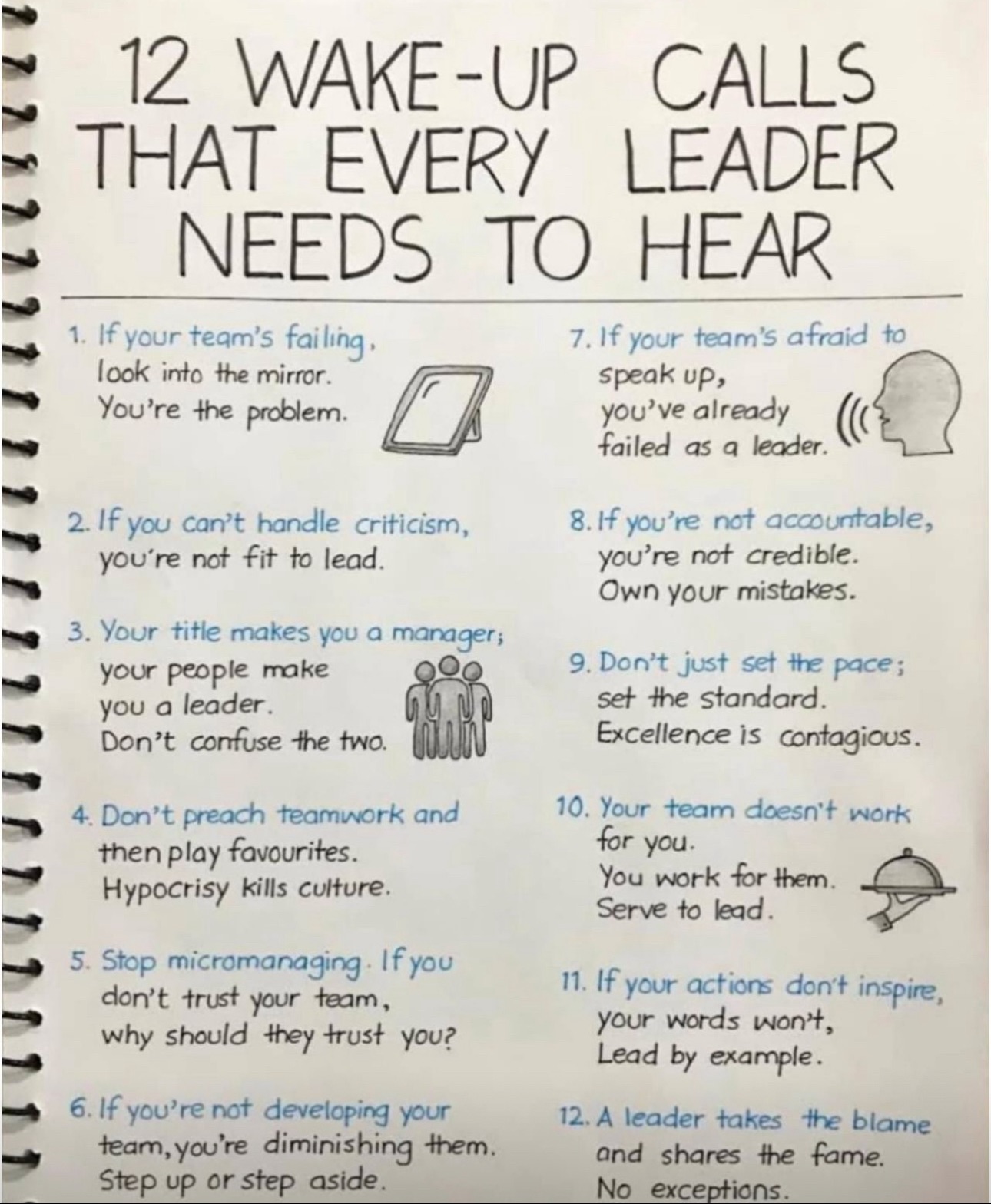
Leadership is a journey filled with continuous learning and growth. Recently, I came across a powerful photo on LinkedIn that shared 12 wake-up calls every leader needs to hear. These insights are vital reminders that no matter how experienced or skilled you are, there’s always room for improvement. Let’s dig into a handful of these wake-up calls and explore their deeper meanings. Remember, leadership is not about being perfect—it’s about embracing opportunities for growth.
1. If Your Team is Failing, Look in the Mirror—You’re the Problem
As leaders, it’s easy to point fingers when things go wrong. However, the true mark of a great leader is the ability to self-reflect and acknowledge their role in the team’s failures. If your team is struggling, it’s crucial to evaluate your leadership style, communication, and support. Are you providing clear direction? Are you creating an environment that fosters collaboration and innovation? Remember, a team’s success or failure often mirrors the leader’s actions and mindset.
2. Your Title Makes You a Manager, Your People Make You a Leader
Holding a leadership title doesn’t automatically make you a leader. Leadership is earned through the trust, respect, and loyalty of your team. It’s essential to differentiate between being a manager and a leader. Managers oversee tasks and processes, while leaders inspire, motivate, and empower their teams. True leadership is about building strong relationships and creating a culture where everyone feels valued and supported.
3. Stop Micromanaging—If You Don’t Trust Your Team, Why Should They Trust You?
Micromanaging can be detrimental to team morale and productivity. It sends a message that you don’t trust your team’s abilities, which can lead to disengagement and a lack of confidence. Instead, delegate tasks and empower your team to take ownership of their work. Trust is a two-way street—by showing trust in your team, you build a foundation of mutual respect and collaboration. This, in turn, encourages your team to trust your leadership.
4. Don’t Just Set the Pace—Set the Standard. Excellence is Contagious.
As a leader, it’s not enough to simply keep things moving; you must set a standard of excellence. When you strive for high standards, you inspire your team to do the same. Excellence is contagious, and when your team sees you consistently aiming for the best, they will be motivated to follow suit. Setting high standards doesn’t mean demanding perfection—it means encouraging a culture of continuous improvement and commitment to quality.
5. If Your Actions Don’t Inspire, Your Words Won’t—Lead by Example
Words are powerful, but actions speak louder. To truly inspire your team, you must lead by example. Your actions should align with the values and goals you promote. Whether it’s demonstrating a strong work ethic, showing empathy, or maintaining integrity, your behavior sets the tone for the entire team. When your team sees you embodying the principles you advocate, they are more likely to be motivated and inspired to do the same.
Conclusion
As mentioned above, every leader struggles from time to time. Leadership is a continuous journey, not a destination. It’s about embracing challenges, learning from experiences, and striving for personal and professional growth. If you’re not continuously learning, you’re not growing. The best leaders are those who remain humble, seek feedback, and are always open to new ideas and perspectives. By committing to lifelong learning, you not only enhance your own leadership skills but also create a culture of growth and innovation within your team.
Leadership is about progress, not perfection. Embrace these wake-up calls and use them as steppingstones to become a more effective and inspiring leader.
Wake-Up Calls Every Leader Needs to Hear


 A Workplace Playbook
Leave a comment